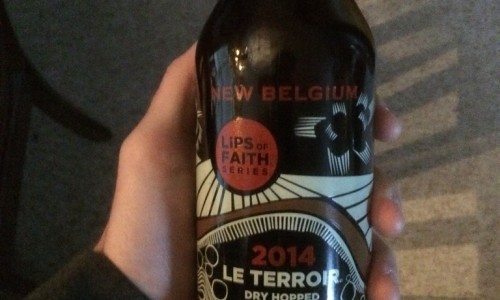
I remember the first "sour beer" that really made an impact on me. The year was 2014. Relatively, I was a nascent fan of craft beer, usually visiting the two breweries we had locally at the time. One Friday night, I was hanging out with some friends. This particular Friday, a friend's older brother joined us, and he brought with him a bomber bottle of New Belgium Le Terroir: their pale, dry hopped sour. It was unlike anything I had ever tasted before. Mouth puckering tartness, a bouquet of herbal, grassy, fruity hop flavors. It was so different.
The same friend who brought his brother to hang out that night bought me a copy of Charlie Papazian's The Complete Joy of Homebrewing for my birthday, starting me on this journey. Since it can take a long time to make a mixed fermentation beer, Charlie's sage advice is particularly pertinent when making sour beers: Relax, don't worry, have a homebrew.
Le Terroir, as well as the New Belgium sour red ale, La Folie, piqued my interest in these beers that had a complex, tart, and even vinegar flavor profile. Cuvée de Jacobins Rouge tended more towards that acetic vinegar profile.
When I started homebrewing, sours seemed to be on the rise again, at least there was some sort of collective interest drummed up. River City Brewing Company in Wichita used to host a "sour beer fest" where you could get pours of all sorts of sours available in the market. A beer distributor friend would later tell me about how for a while there was a demand for increasingly tart beers, and then it dropped off.
It wasn't long before I had to try my hand at making them. Starting with a base beer, based off of the pale sour beer used in Le Terroir, I used Wyeast's Roselare blend, augmented by the dregs of whichever sours my friend and I would acquire and drink, since the Roselare blend was known not to get sour enough on the first generation, otherwise.
For anyone interested, this is the base beer recipe:
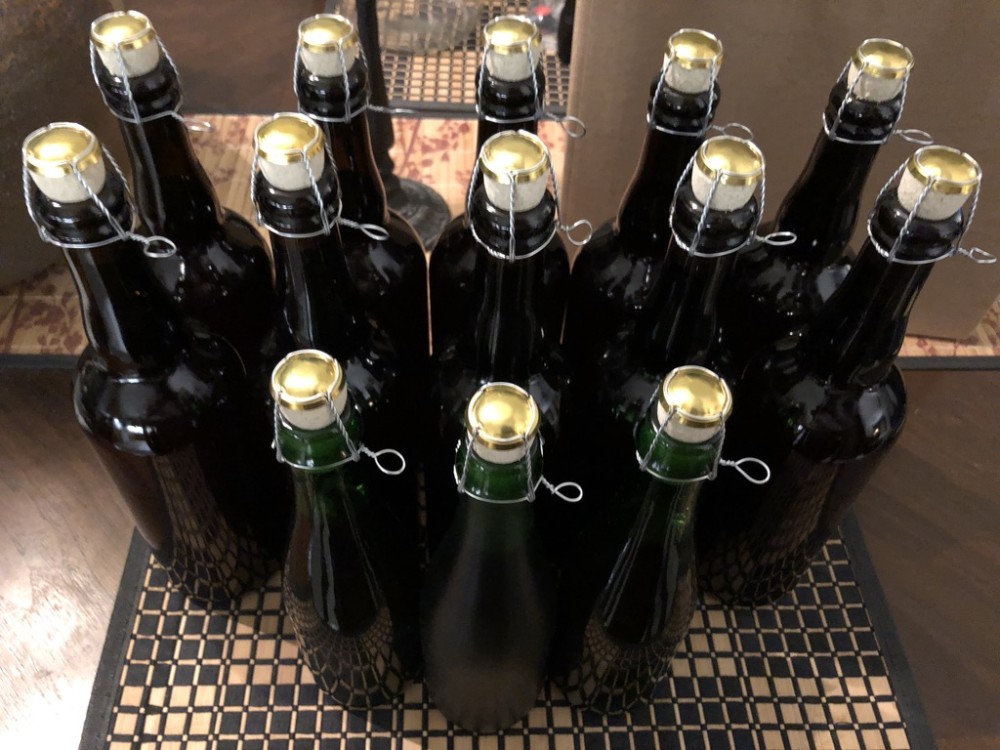
Bottles of Solera System 1: Red Dwarf
Golden Sour Base Beer
FermentablesAmerican 2-row 55.6%
Flaked Wheat 22.2%
Flaked Oats 11.1%
Carapils 5.6%
Caramel 80L 5.6%
Mash Rest: 60m @ 158°F
Hops
Hallertau @60m Boil 14 IBUs
Yeast
Primary: SafAle US-05
Secondary: Wyeast Roselare Blend
The intention was to start a "Solera", intending to pull and then refill the same amount of beer each year to make it into a special one off beer with aged and new components in the blend. This was intended to provide a beer of an average age that hopefully could mimic a blend without having to keep multiple vessels.
Unfortunately, I got only one iteration out of it, a tart cherry sour I called "Red Dwarf", but even that trended too much towards the acetic character for me. There was clearly too much oxygen exposure, from samples and too much headspace. Always make sure the airlocks on your mixed fermentation beers don't dry out.
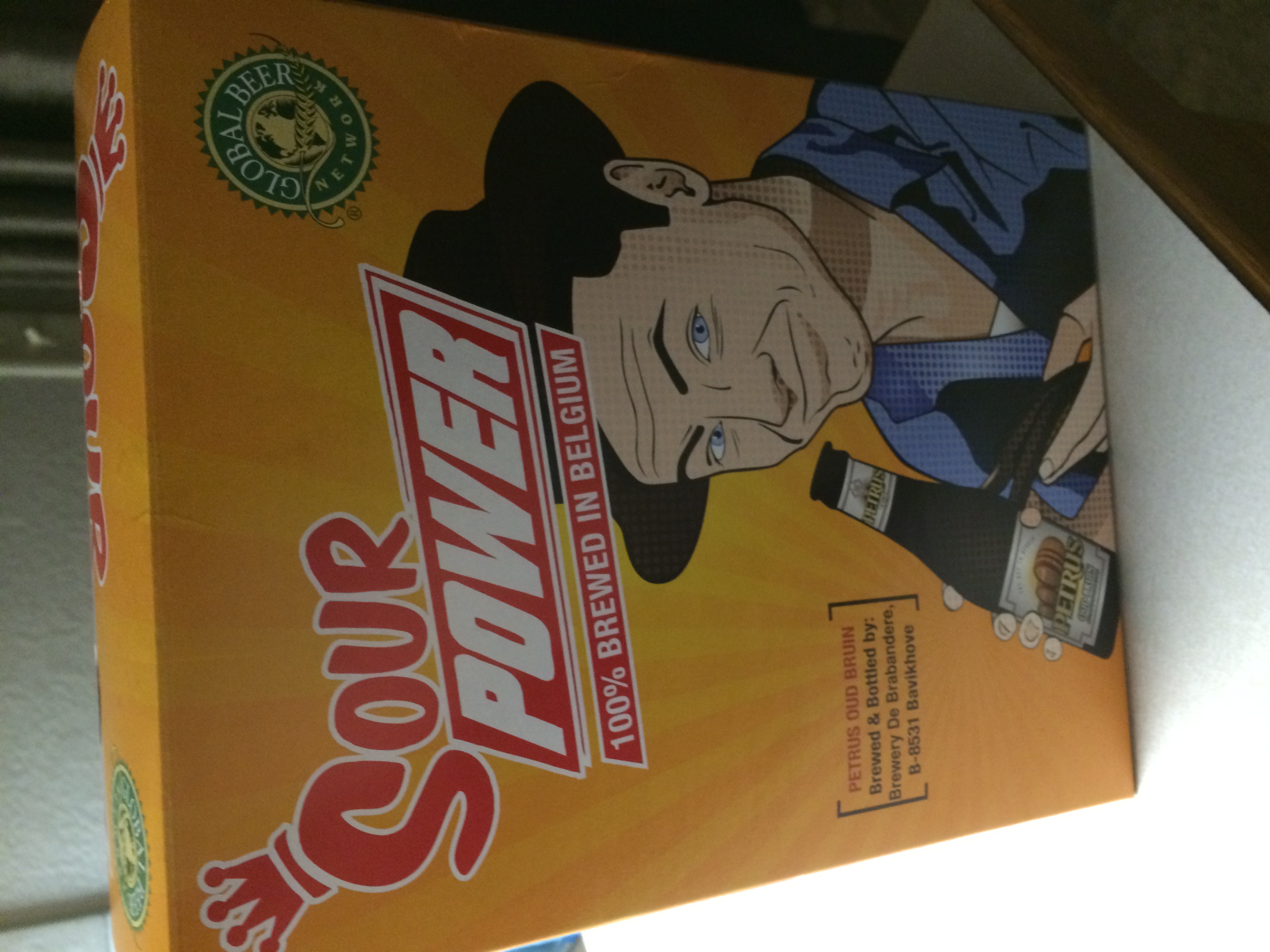
So what about the post title? Well, I referenced this a little earlier, but there seemed to be a huge boom of interest in these kinds of beers. Plenty of breweries make fruited kettle sour beers with admittedly broader market appeal, but these are a far cry from Flanders Reds, Lambics, even old school Berliner Weisse, before the bright colored shot of syrup became ubiquitous.
In short, I still think they're cool, but the ones I thought were really cool only have become more difficult to find. That's how it goes, sometimes.
But those are topics for another time. The next post in this series will recount a visit to New Belgium, as well as a memorable visit to American Solera.